
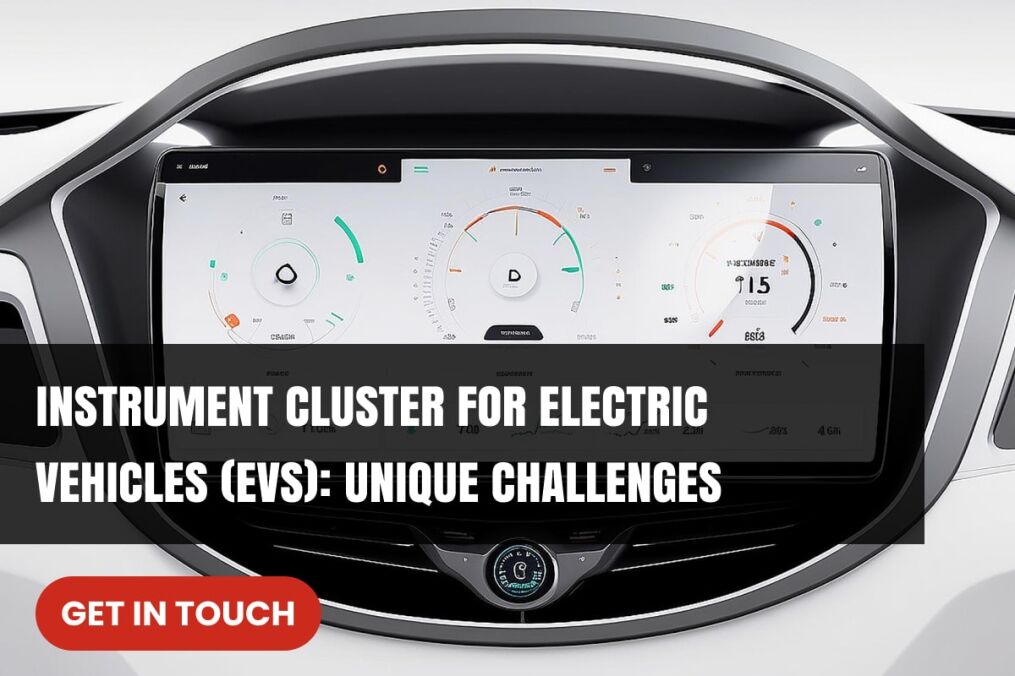
Electric vehicles (EVs) have successfully transitioned from a niche market segment to a dominant force in the automotive industry. As governments across the USA and Canada actively promote sustainability and greener alternatives to internal combustion engine (ICE) vehicles, the momentum behind EVs continues to accelerate. This widespread shift to electric transportation introduces an array of fresh technologies and components, with the instrument cluster standing out as one of the most vital.
The instrument cluster, commonly referred to as the dashboard display, remains a foundational element in any vehicle by keeping drivers informed of critical metrics like speed, fuel or charge levels, and overall system health. However, electric vehicles introduce highly specific demands to this display. Lacking traditional combustion engines, EVs rely heavily on battery packs, regenerative braking systems, and highly specialized software. Consequently, an EV’s instrument cluster must adapt to an entirely new ecosystem of data points, delivering a significantly more complex stream of information than its traditional predecessors.
In this blog post, we will examine the unique challenges faced by electric vehicle instrument clusters, break down how they differ from conventional dashboard systems, and look at the innovative solutions the automotive industry is implementing to address these hurdles. Additionally, we will cover how to properly maintain, repair, or upgrade your EV’s dashboard display to guarantee the absolute best driving experience.
An instrument cluster is the group of gauges, dials, and screens located behind the steering wheel. These are used to show vital data that helps drivers operate their vehicles efficiently and safely. In traditional cars, the instrument cluster typically includes:
For electric vehicles, however, the instrument cluster goes beyond just these basic metrics. The dashboard must display information specific to an electric vehicle’s operations, such as battery charge level, energy consumption, range estimation, and regenerative braking status. Let’s dive into why these aspects present unique challenges for EV manufacturers.
We pride ourselves on offering a wide range of dashboard instrument clusters for various vehicle types. Whether you drive a sedan, SUV, truck, or any other vehicle, we have the perfect fit for you.
Unlike traditional vehicles, which rely on a fuel tank to power the engine, electric vehicles use a battery pack as their energy source. This brings with it new challenges for the instrument cluster.

The most fundamental difference is the need for accurate battery monitoring. The instrument cluster must display the battery charge level in real-time. But this isn’t as simple as showing a percentage or bar; the battery charge status is dynamic and impacted by factors like temperature, driving habits, and load. Displaying this information in a clear and easy-to-understand way is crucial to ensuring the driver doesn’t get stranded with a depleted battery.
The second challenge related to battery monitoring is range estimation. Range is the distance an EV can travel before needing to recharge. Unlike fuel-powered vehicles, the range of an EV can fluctuate dramatically based on driving conditions, speed, terrain, and even the use of air conditioning or heating.
Range anxiety is a real concern for EV owners, so accurate, up-to-date range estimation is crucial. Instrument clusters must combine data from various sources—such as driving habits, terrain, and even weather conditions—to calculate and display a realistic estimate of how far the vehicle can travel on the remaining charge.
Another key challenge for EV instrument clusters is tracking and displaying energy regeneration and overall energy efficiency. One of the primary advantages of electric vehicles is regenerative braking—the ability to convert braking energy into electricity and feed it back into the battery. This process must be monitored and displayed clearly to the driver.
To optimize energy use, the instrument cluster needs to display real-time feedback on energy consumption. It should show not only how much energy the vehicle is using but also how much energy is being regenerated through braking. This feedback helps the driver adjust their driving style to maximize range and efficiency.
EVs also need to track efficiency metrics, such as miles per kilowatt-hour (kWh), to give the driver a sense of how efficiently the vehicle is operating. These displays need to be constantly updated as the vehicle accelerates, brakes, and travels.
In EVs, these systems are often more advanced due to the electric vehicle’s reliance on sensors, cameras, and artificial intelligence to navigate. Instrument clusters must integrate information from these systems in real-time, providing the driver with clear alerts or information about their surroundings.
This poses a challenge: Instrument clusters must not only display the standard data (speed, charge level, etc.) but also integrate this advanced data without overwhelming the driver. Information must be shown in a clear, organized manner, helping the driver make quick decisions based on the data available.
As electric vehicles continue to innovate, their instrument clusters must evolve to match the demands of modern drivers. With the rise of digital screens, touch-sensitive displays, and heads-up displays, the cluster needs to offer a modern, interactive interface.
The challenge lies in creating an interface that’s easy to read while offering advanced functionalities. Drivers don’t want to be overwhelmed by information, but they do need access to vital data such as energy consumption, regenerative braking status, and real-time diagnostics.
Moreover, many EV manufacturers now include augmented reality (AR) and interactive maps in the instrument cluster, providing real-time navigation information. While these features are beneficial, they add complexity to the design and functionality of the instrument cluster.
To tackle the challenges posed by electric vehicles, manufacturers are integrating advanced solutions into EV instrument clusters. Here’s how the industry is evolving:
AI-driven algorithms are being developed to improve range estimation. These algorithms can predict how far an EV can go based on real-time driving data, including driving style, terrain, weather conditions, and more. By learning from past driving behavior, these AI systems can offer more accurate and personalized range estimates.
To help EV owners optimize their driving habits, instrument clusters are featuring real-time feedback on energy usage. This includes data on how much energy is being consumed by different systems (e.g., air conditioning, heating, and acceleration) and how much energy is being regenerated through braking. The more dynamic the energy monitoring, the better the driver can manage battery life and extend range.
In response to consumer demand for personalized driving experiences, many modern EVs offer modular displays. These displays allow drivers to customize what information appears on their dashboard, whether it’s energy consumption, range, or advanced driver assistance features.
Some manufacturers are incorporating haptic feedback to provide tactile alerts. For example, when the vehicle reaches a critical battery level or when the driver needs to pay attention to the range, the instrument cluster can vibrate or provide other tactile feedback, reducing the need to take eyes off the road.
As electric vehicles continue to dominate the automotive landscape, the instrument cluster is becoming an essential tool in helping drivers navigate their EVs safely and efficiently. With the increased complexity of EVs, these clusters need to display a wealth of data, from battery charge to energy regeneration and range estimation.
If your EV instrument cluster is malfunctioning or displaying inaccurate data, don’t wait to address the issue. A malfunctioning or outdated dashboard can lead to poor driving decisions, reduced efficiency, and a frustrating driving experience.
4.8
Excellent!

For comprehensive EV instrument cluster repair, upgrades, and replacements, trust us to provide the best solutions for your needs.
Share:
We will try to give you an exact quote in 1 Business day


We will try to give you an exact quote in 1 Business day


