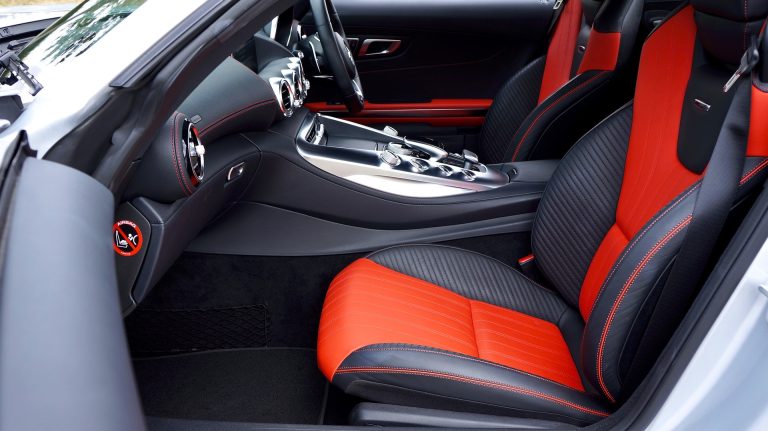

The dashboard is your window into your vehicle’s health. But if you’ve recently switched from a gas-powered car to an electric vehicle, or are simply curious about the difference, you may have noticed that the instrument cluster looks and behaves very differently. From what’s displayed to how failures are repaired, EV and traditional car dashboards are built for two very different worlds. Here’s everything you need to know.
An instrument cluster also called a dashboard gauge cluster or speedometer cluster, is the panel directly in front of the driver that displays critical driving data. In a traditional car, this includes speed, RPM, fuel level, engine temperature, and warning lights. In an EV, the same panel is reinvented to reflect an entirely new set of priorities: battery, energy, and range.
| Feature | ⚡ Electric Vehicle (EV) | ⛽ Traditional (ICE) Vehicle |
|---|---|---|
| Speed Display | Digital speedometer | Analog or digital speedometer |
| Fuel / Energy | Battery charge % + range (km/mi) | Fuel gauge (analog) |
| RPM / Tachometer | Not present (or power meter) | Tachometer always present |
| Engine Temp | Battery temperature gauge | Coolant temperature gauge |
| Display Type | Fully digital TFT / OLED | Analog, hybrid, or digital |
| Regen Braking | Regenerative braking meter | Not applicable |
| Warnings | Battery, charging, thermal alerts | Oil, fuel, engine, transmission |
| Customization | High — software-driven layouts | Low — fixed hardware gauges |
| Repair Complexity | Software-heavy, specialized tools | Hardware-focused, widely serviceable |
The EV digital instrument cluster is built around electricity as the core variable. Instead of a fuel gauge, you see:
Because EV clusters are fully software-driven, manufacturers can push display updates over the air (OTA), allowing the dashboard itself to evolve without any physical changes.
Traditional vehicles use a mix of analog and digital displays depending on the model year and trim level. A standard gas car instrument cluster typically includes:
This is where the differences really matter for vehicle owners. Traditional instrument cluster repair — whether it’s a broken speedometer, failing gauges, or a cracked lens — is a well-established, widely supported service. Our team services all makes and models across cars, trucks, SUVs, and heavy machinery.
EV instrument clusters, by contrast, are deeply software-dependent. Many EV cluster failures stem from:
Generally, traditional instrument clusters are faster and less expensive to repair. Parts are more universally available, the hardware is standardized, and many repairs, such as gauge faceplate replacement or lens replacement, are straightforward.
EV cluster repairs require specialized diagnostic software, and in some cases, the entire cluster must be reprogrammed or replaced. However, as EVs become more mainstream, repair options are expanding. We offer custom cluster orders and can source even hard-to-find EV cluster units.
Whether you drive a gas-powered pickup truck or a battery-electric sedan, the instrument cluster serves the same fundamental purpose: keeping you informed and safe. The difference lies in what information matters most, and how that information is delivered.
If your dashboard is acting up, EV or traditional, our team is here to help. We carry over 50,000 clusters in stock and offer professional repair services for all vehicle types, with 0% financing available. Contact us today or call US: 954-842-4225 | CA: 416-749-1212.
Dashboard Instrument Cluster proudly serves customers across Canada and the USA. No matter where you are, we’re here to provide expert instrument cluster repairs that get your heavy equipment back to work quickly and safely.
Miami Location: 19591 NE10th Ave, Building 3 Units F&G, Miami, Florida 33179 | Phone: 954.842.4225 | Email: miami@dashboardinstrumentcluster.com
Toronto Location: 750 Oakdale Rd, Unit 16, Toronto, ON M3N 2Z4 | Phone: 416.749.1212 | Email: toronto@dashboardinstrumentcluster.com
The biggest difference is what information the dashboard shows. EV dashboards focus on battery charge, estimated range, and energy flow, while traditional dashboards display fuel level, RPM, and engine temperature. Essentially, the cluster is built around electricity in EVs and combustion in gas-powered cars.
Repair: Minor flickers, partial gauge failures, or software glitches
Replace: Severely damaged screens, repeated failures, or irreparable software corruption
Professional technicians can help diagnose and recommend the safest option.
Stepper motor failures, dim or flickering backlights, and inaccurate gauges are the most frequent issues. They are usually easy and inexpensive to repair compared to EV clusters.
Costs vary depending on the type of vehicle, screen size, and software complexity. Minor repairs might be a few hundred dollars, but full replacements, especially OEM high-res clusters, can be over a thousand.
Professional services like Dashboard Instrument Cluster provide fast diagnostics, repair, and replacement, with stock for over 50,000 clusters and support for both EV and ICE vehicles across the US and Canada.
Share:






We will try to give you an exact quote in 1 Business day