
The dashboard is your window into your vehicle’s health. But if you’ve recently switched from a gas-powered car to an electric vehicle, or are simply curious about the difference, you may have noticed that the instrument cluster looks and behaves very differently. From what’s displayed to how failures are repaired, EV and traditional car dashboards are built for two very different worlds. Here’s everything you need to know.
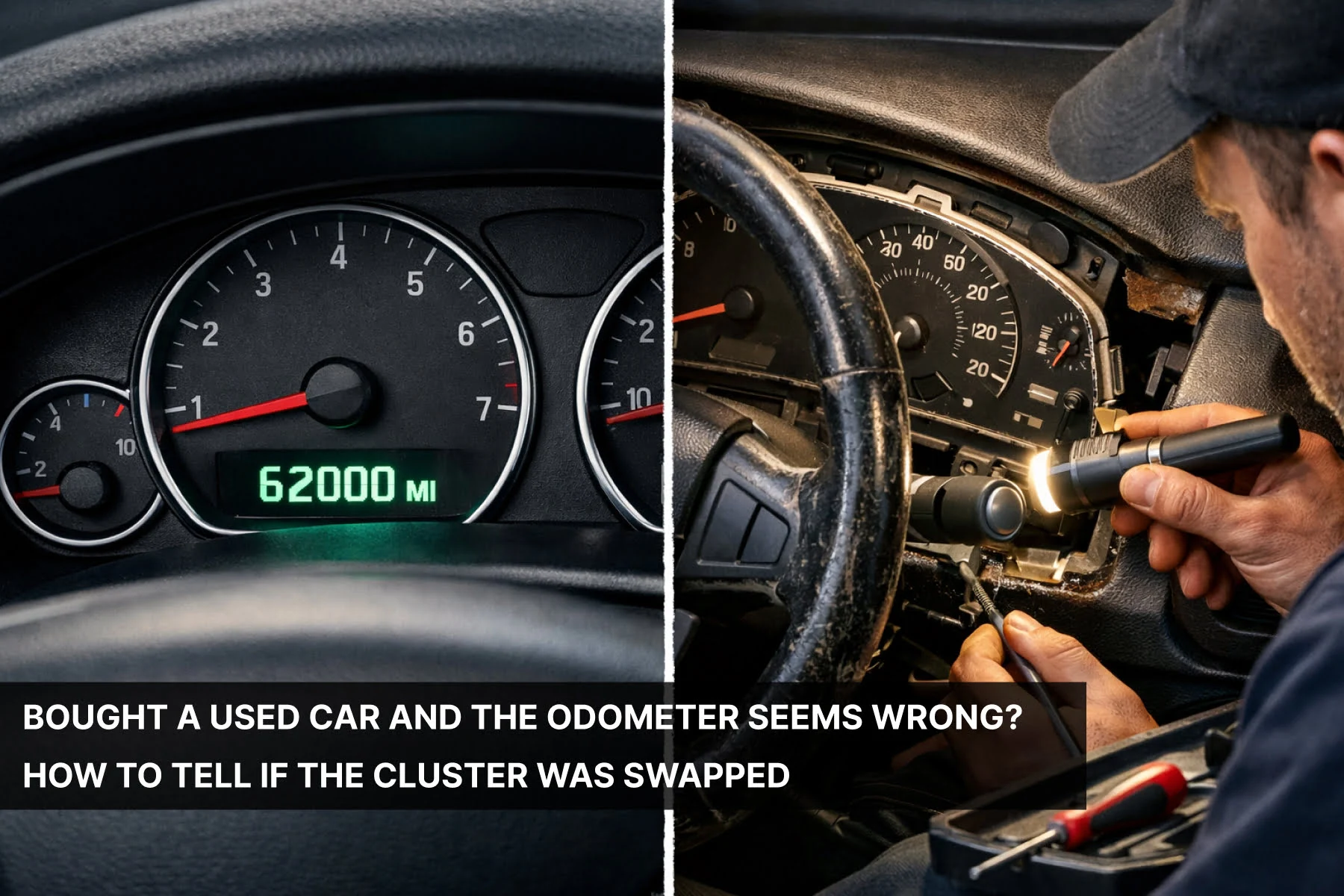
A lower mileage reading means a higher sale price. A vehicle showing 60,000 miles commands thousands more than the same car showing 140,000. Instead of digitally rolling back the odometer which modern ECUs can flag some fraudsters simply replace the entire instrument cluster with a used unit from a lower-mileage donor car.
The result looks clean on the dashboard. But the rest of the car tells a different story.
Under the Federal Odometer Act, a seller must disclose any instrument cluster replacement on the vehicle title. Selling a car with an undisclosed swapped cluster is a federal crime, carrying
civil fines up to $10,000 per violation and criminal penalties up to $250,000 with potential prison time.
1. Check physical wear against the odometer reading. Walk around the car and look at the brake pedal rubber, driver’s seat bolster, steering wheel grip, and door sill scuff plates. A vehicle at 50,000 miles should show very different wear from one at 150,000. If those surfaces are heavily worn but the dash reads low mileage, trust the wear not the number.
2. Inspect the cluster bezel and surrounding dash trim. Removing an instrument cluster requires tools. Look for fresh scratches, tool marks, or stripped screws around the cluster housing. Mismatched screw heads or a bezel that doesn’t sit flush are classic giveaways. Fingerprints or smudges on the inside of the instrument lens are especially telling that surface is sealed from the factory.
4. Look for an odometer disclosure sticker. When an instrument cluster is legally replaced, the technician is required to place a sticker on the driver-side door jamb noting the prior mileage and the date of replacement. No sticker, combined with other red flags, is a serious warning sign.
5. Request an OBD-II scan and ECU mileage check. Modern vehicles store mileage redundantly in the ECU, ABS module, airbag controller, and sometimes the infotainment system. A professional diagnostic scan can pull the mileage stored in these modules. If the ECU reads 148,000 miles but the dashboard shows 62,000, the cluster was swapped without reprogramming the supporting modules.
The tire DOT date code is a free, built-in mileage checker. The four-digit code on the tire sidewall shows the week and year of manufacture. If a car claims 30,000 miles but the original tires are eight years old, the math doesn't add up.
We carry over 50,000 used and recertified clusters for all makes and models cars, trucks, and heavy machinery. Serving the USA and Canada.
Not every swapped cluster means fraud. Instrument clusters do fail, and legitimate instrument cluster repair and replacement is common. The key difference is documentation. A legitimate swap will have a disclosure sticker, a service receipt, and the odometer on the title marked as “not actual mileage” or “exceeds mechanical limits” if the new cluster couldn’t be programmed to match the original reading.
If a seller can produce a clear service record showing the cluster was replaced along with the prior mileage and the ECU confirms consistent numbers there’s no fraud. You’re simply buying a car with a documented repair history. That’s actually a good sign.
Halt the sale immediately. Document all evidence, including photos of the instrument cluster, the car title, and the vehicle listing. Next, report the incident to your state DMV and the NHTSA Office of Odometer Fraud Investigation. Under the Federal Odometer Act, you could be entitled to financial damages of $10,000 or triple your actual financial loss whichever amount is greater.
A swapped instrument cluster is one of the harder forms of mileage fraud to catch with the naked eye but it’s not impossible. Physical wear, a careful look at the cluster bezel, a VIN report, and a professional OBD scan together create a nearly bulletproof verification process. When the numbers don’t line up, walk away.
And if you’re on the other side needing a legitimate cluster replacement for your own vehicle always insist your technician documents the repair properly to protect your resale value and your buyer’s trust.
We repair and replace instrument clusters for all makes, models, and years with full documentation so your title stays clean. Miami & Toronto, shipping across North America.
Yes. Replacing the cluster with a lower-mileage donor unit changes what the dashboard displays. However, modern vehicles store mileage in multiple modules ECU, ABS, and airbag controller so a scan can expose the mismatch.
Yes. The Federal Odometer Act requires sellers to disclose any cluster replacement on the title. Concealing a swap to misrepresent mileage is a federal crime with fines up to $10,000 per violation and possible prison time.
Look for tool marks or scratches around the cluster bezel, fingerprints inside the lens, mismatched screws, and wear on pedals or seats that doesn’t match the displayed mileage. These are the fastest, free checks before spending on a report.
A Carfax or AutoCheck report logs mileage at every title transfer and service visit. A sudden mileage drop or freeze between entries is a strong indicator of a cluster swap or odometer tampering
Have a technician run an OBD-II scan to compare ECU mileage against the dashboard reading. If fraud is confirmed, report it to your state DMV and the NHTSA Office of Odometer Fraud Investigation. You may be eligible for compensation under federal law.
Share:
We will try to give you an exact quote in 1 Business day


We will try to give you an exact quote in 1 Business day


