If you own a Toyota, you know how reliable your vehicle is, but what happens when the dashboard instrument cluster starts acting up? This panel isn’t just a display, it’s the central hub showing your speed, fuel level, engine temperature, and warning lights. Ignoring flickering gauges, dim lighting, or inaccurate readings can quickly compromise safety. In severe cases, a full instrument cluster failure Toyota can leave you without essential driving information, making driving unsafe and potentially illegal since accurate speedometers and odometers are required in most U.S. states and Canadian provinces.
Deciding whether to repair or replace your cluster can feel overwhelming, but knowing the difference is crucial for safety, reliability, and cost-effectiveness. Minor problems may be resolved with simple repairs, but recurring failures or widespread malfunctions usually indicate that a full Toyota instrument cluster replacement is the smarter choice. This guide walks you through common dashboard issues, signs it’s time to replace, and what to expect from professional service. By the end, you’ll know exactly when a repair suffices and when a complete Toyota dashboard repair vs replacement is necessary to keep your vehicle safe and reliable.
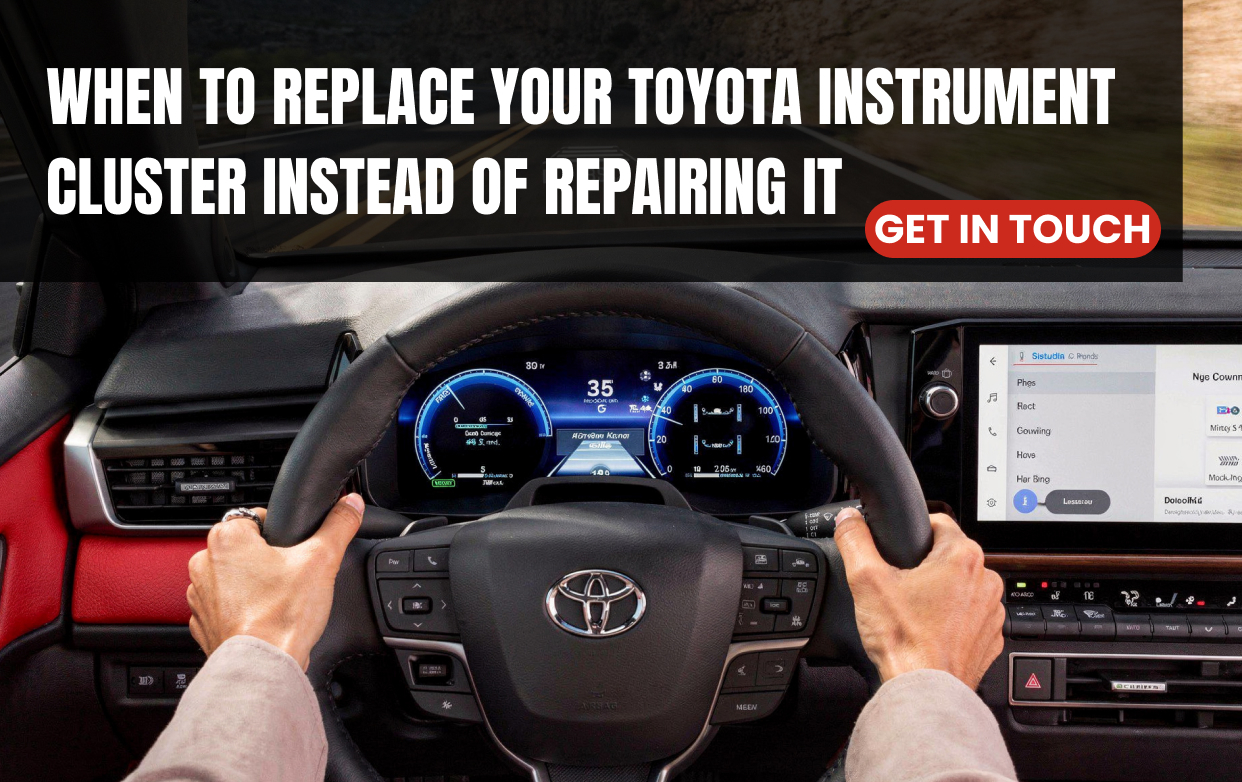
The instrument cluster is the dashboard panel behind your steering wheel that displays critical vehicle information.
Track your speed and mileage to avoid violations and maintain accurate service records.
Alerts you to fuel levels, preventing unexpected stops or running out of gas.
Monitors engine heat to prevent overheating and potential engine damage.
Signals for check engine, ABS, airbags, and battery issues help you respond to problems early.
Communicate vehicle status and enhance safe driving.
A fully functional cluster ensures safety, accurate monitoring, and legal compliance while supporting long-term vehicle reliability.
Flickering or dead gauges often result from cracked solder joints or minor circuit failures. Fuel, speed, or temperature gauges may freeze, jump, or stop responding. Driving with unreliable readings increases safety risks, and skilled technicians can repair these faults to restore proper functionality.
Erratic speedometer behavior is usually caused by faulty sensors or electrical issues. The needle may move unpredictably or display incorrect speeds, making it difficult to adhere to speed limits. Repairs often involve replacing the sensor or correcting circuit connections.
Warning lights alert you to engine problems, ABS faults, or airbag issues. If these lights fail due to burnt-out LEDs or wiring faults, critical alerts may be missed, leading to potential accidents or costly repairs. Repairing affected components restores safety and dashboard reliability.
Dim or uneven backlighting often stems from aging LEDs or loose internal connections. Gauges become difficult to read, especially at night, increasing the risk of missing vital information. Replacing bulbs or fixing wiring ensures optimal visibility.
In severe cases, the entire Toyota cluster may stop working. All gauges and warning lights become inactive, making driving unsafe and possibly failing inspections. Causes can include water damage or major circuit failure, and a full replacement is typically the safest solution.
Heat and vibration can crack solder joints inside the cluster, causing flickering or partial gauge failure. Reflowing or replacing solder connections can restore accurate readings and save money compared to full cluster replacement.
LED or bulb failures reduce visibility, especially at night. Replacing burnt-out lights or repairing loose wiring can solve the issue without replacing the full cluster, ensuring safer driving conditions.
If the same problem keeps returning despite repairs, the cluster is likely worn out. Repeated failures indicate repairs may no longer be cost-effective or reliable.
When more than one gauge fails or behaves erratically, it signals widespread internal damage. Repairing individual components may not fix all issues, making replacement the safer choice.
Cracks, water intrusion, or burned circuit boards cannot be reliably repaired. Physical damage compromises internal electronics and may worsen over time. Replacing the cluster restores full functionality safely.
Older clusters may lack modern calibration, bright backlighting, or advanced displays. Replacing with a newer cluster improves readability, functionality, and resale value.
If all gauges, warning lights, and indicators stop working, driving becomes unsafe. A full replacement ensures all systems function correctly and comply with traffic regulations.
| Issue | Recommended Action | Explanation |
|---|---|---|
| Flickering gauges | Repair | Minor electrical issue; isolated problem |
| Non-responsive gauges | Repair (if isolated) | Single gauge or minor software issue |
| Physical damage | Replace | Cannot reliably repair; risk of further failure |
| Control module failure | Replace | Core electronics fail; replacement required |
| Recurring errors | Replace | Underlying complex failures; repair ineffective |
Cost & Time Considerations
Repairs: $100–$400, faster turnaround, temporary solution for minor issues
Replacement: $300–$1,200+, slightly longer due to programming, full restoration, long-term reliability
Example: A 2015 Toyota Camry with a flickering fuel gauge may be repaired for $150. However, if multiple gauges fail or problems recur, a $600–$800 replacement ensures safety, reliability, and peace of mind.
New Units: OEM units for full reliability
Refurbished Units: Restored to full functionality
Used Units: Only if verified for compatibility
Modern clusters require programming to match mileage, fuel sensors, and warning systems. Professional installation ensures accurate calibration and avoids further electronic issues.
Diagnose the cluster to confirm replacement is necessary
Carefully remove the old cluster to prevent wiring damage
Install and program the new cluster for precise readings
Test all gauges, lights, and indicators to ensure full functionality
Your Toyota’s dashboard instrument cluster is the backbone of vehicle safety and performance. Every gauge and warning light keeps you informed while driving. Flickering gauges, dim backlighting, or erratic readings may seem minor but can escalate into instrument cluster failure Toyota, risking safety, performance, and legal compliance.
While small issues can sometimes be repaired, recurring problems, multiple malfunctioning gauges, or physical damage are clear signs that a Toyota instrument cluster replacement is the smarter, long-term solution. Partnering with a trusted provider like Dashboard Instrument Cluster ensures professional replacement, accurate calibration, and restored reliability. Acting early protects your vehicle, maintains resale value, and gives you confidence that your dashboard is fully functional. Don’t wait for a critical warning light to fail, schedule professional service today and drive safely, accurately, and stress-free.
If your gauges flicker constantly, warning lights stay on without reason, or multiple indicators fail, it’s usually a sign that a repair might not last. A professional inspection can confirm whether a Toyota instrument cluster replacement is the safest and most reliable option.
Driving with a faulty cluster is risky. Without accurate speed, fuel, or warning indicators, you could run out of gas, overheat your engine, or miss critical alerts, putting you and others in danger. Quick repair or replacement keeps your drives safe.
Yes. Flickering gauges, dim backlighting, or single gauge failure can often be repaired. However, repeated failures or multiple malfunctions usually mean replacement is the better long-term solution.
Absolutely. A fully functional dashboard instrument cluster signals proper vehicle maintenance to buyers, increasing confidence and often improving resale price compared to a car with a faulty or malfunctioning cluster.
Reputable services like Dashboard Instrument Cluster specialize in professional Toyota cluster repairs and replacements. Choosing an experienced provider ensures accurate programming, safe installation, and restored dashboard reliability.
Share:






We will try to give you an exact quote in 1 Business day