
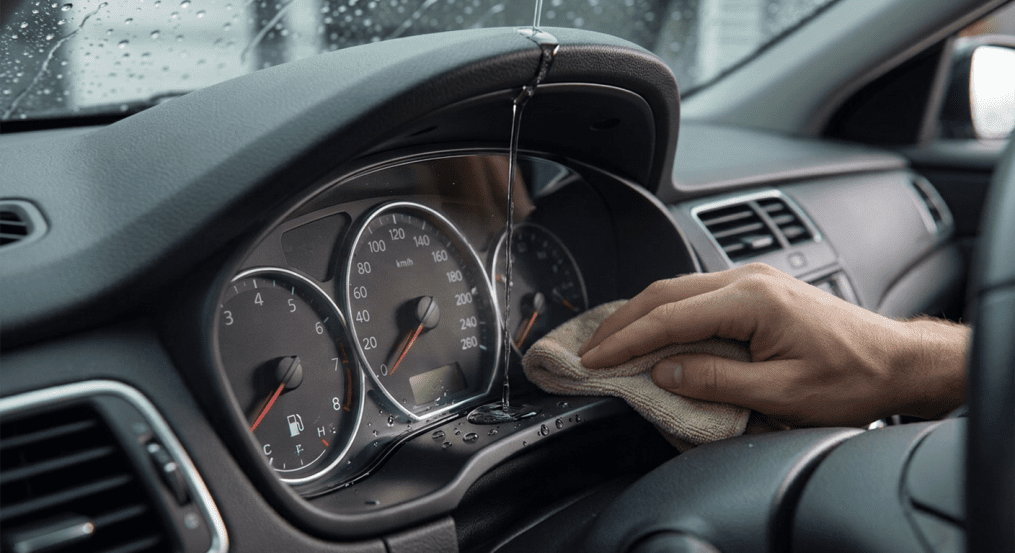
Driving through a heavy rainstorm or taking your vehicle through a local car wash should not cause your dashboard to turn off. Yet, thousands of drivers across the USA and Canada face a scary situation every year: the rain starts pouring, and suddenly the dashboard gauges stop working when it rains.
If your speedometer stops working when it rains, or your car dashboard flickering in rainy weather is keeping you from driving safely, you are dealing with a hidden water problem.
When your instrument cluster goes black after car wash runs or heavy downpours, the issue is almost never a random software glitch. Water is getting into places it should never be.
This guide breaks down exactly why your instrument cluster stops working after rain, how water sneaks behind your dash, and what you can do to fix it.
Water damage does not always look the same in every car. Depending on how much water gets inside and where it travels, you might experience a few different symptoms:
The Total Blackout: Your odometer and gauges dead after rainstorm events leave you completely in the dark.
The Light Show: You notice your dash lights blinking after heavy rain or random warning symbols popping up when they should not be on.
The Erratic Needle: Your speedometer or fuel gauge jumps up and down randomly.
The Intermittent Glitch: A dashboard electrical glitch during rain that suddenly disappears once the car dries out for a day or two.
No matter which symptom you have, driving without an accurate read on your speed or fuel level is unsafe. It can also lead to expensive mechanical issues if you miss a critical warning light.
To understand how your dash gets wet, you have to look at the weak spots in your vehicle’s body layout. Water does not usually spray directly onto your dashboard. Instead, a water leak causing cluster failure usually starts at the top or front of your car and drips down into the hidden electrical wiring.
Here are the most common ways water sneaks in:
Most cars with a sunroof have small drain tubes hidden inside the roof pillars. These tubes channel rainwater away from the roof and down to the ground. Over time, leaves, pine needles, and dirt clog these drains. When it rains heavily, the water backs up and leaks out from under the headliner, running down inside the dashboard framework. It then pools directly onto your electrical components.
The rubber glue seal holding your front windshield in place can degrade due to hot summers and freezing winters in North America. A minor windshield leak can let water seep directly behind the plastic panels of your upper dash. This water drips straight onto the back of your gauges.
The cowl is the plastic grille area at the bottom of your windshield where your wipers sit. Underneath this grille are drains meant to push rainwater away from your engine bay. If leaves block these drains, rainwater rises and pours through the cabin air intake vent, dumping water right into the indoor fuse box area.
Once moisture enters the cabin, it targets three main electrical areas that keep your dashboard running:
Water is an excellent conductor of electricity. If it reaches your indoor fuse box, it creates short circuits. A fuse box moisture instrument cluster failure happens when water jumps across terminals, blowing the main fuse to your dash or cutting off the clean power supply.
Your dashboard relies on a main computer module to translate signals from your engine to your screen. Water running down the side pillars often hits this area. Common bcm water damage symptoms include erratic wipers, locking issues, flashing headlights, and a completely dead dashboard screen.
If moisture gets inside the plastic housing of the cluster itself, it lands on the green circuit board. Over time, this creates dashboard circuit board corrosion from moisture. The metal pathways on the board rust and break, which ruins the connection to your speedometer and odometer.
While any vehicle can suffer from a water leak, certain models across the US and Canada are known for specific design weak spots:
Ford F150: A ford f150 instrument cluster cuts out when wet often because of a bad third brake light seal or a leaking satellite antenna base that lets water track all the way down to the passenger-side fuse panel.
Chevy Silverado: If your chevy silverado gauges stop working after rain, it is commonly linked to water leaking through the top cab lights or a failing windshield seal dripping onto the steering column wiring.
Honda Accord: A honda accord dash lights flickering in rain is a frequent complaint when the front cowl drains get plugged up with outdoor debris, forcing water into the driver’s side electrical harness.
Jeep Wrangler: Because these vehicles are built for the outdoors, a jeep wrangler dashboard electrical issues after rain is usually tied to door seal failures or water entering a loose upper windshield hinge seal.
BMW: Owners often report bmw instrument cluster water ingress when the door vapor barriers unseal or the complex sunroof drain network tears inside the dashboard column.
If your dashboard dies right after a rainstorm or a car wash, you need to act quickly to limit the damage.
Critical Warning: Turn off the vehicle and disconnect the car battery immediately if you suspect active water is dripping behind the dash. Running live electrical current through wet circuit boards causes permanent short circuits and can burn out expensive parts instantly.
Once the battery is disconnected, check the floors for damp carpets. Feel under the dashboard near the pedals and the passenger footwell to locate where the water is coming from.
If it was a minor splash, you can try to learn how to dry out a water damaged dash cluster by running a dehumidifier inside the locked vehicle for 24 hours or using a fan pointed at the floorboards. However, if the circuit board inside has already shorted out, drying it will not fix the broken pathways.
Once water leaves behind rust or green corrosion on your circuit board, the cluster needs professional attention. You do not have to buy a brand new, highly expensive unit from a local dealership, which would also require difficult mileage programming.
Instead, choosing to fix water damaged instrument cluster units through a specialty repair service is the smartest move. At Dashboard Instrument Cluster, we specialize in testing, rebuilding, and repairing water-damaged units. A professional repair involves opening the housing, cleaning off corrosion using safe chemicals, resoldering broken connections, and replacing damaged internal components like stepper motors or digital screens.
Whether you need a reliable dashboard instrument cluster repair shop USA location or a convenient mail in instrument cluster repair service, fixing your current unit saves you money and keeps your original vehicle mileage intact.
Yes, in many cases, a water damaged instrument cluster can be fixed. If the water caused a simple short circuit or mild surface corrosion, a professional technician can clean the board and repair the broken circuit traces. However, if the board is severely burned from a major short circuit, it may need a full rebuild.
The cost to replace dashboard cluster due to moisture depends heavily on your car model. A brand-new unit from a dealership can run anywhere from $500 to over $1,500 plus labor and programming fees. Choosing a repair or rebuild service for your original cluster is much cheaper and typically costs a fraction of a new unit.
If your speedometer stops working when it rains but works fine in dry weather, you have an intermittent connection issue. Rainwater is likely dripping onto a loose ground wire, a corroded harness plug, or an exposed speed sensor wire underneath the vehicle, temporarily breaking the signal until it dries.
Yes. Fuses protect your dashboard from power surges. If water creates a short circuit anywhere along the dash power line, the fuse will pop to protect the system. If your gauges go dark, checking the instrument panel fuse is always a great first diagnostic step.
Yes. Automatic car washes use high-pressure water jets sprayed from multiple angles. If your windshield seals are slightly worn or your cabin air intake drains are partially clogged, this high-pressure water can easily force its way past the seals and flood your dashboard electronics.
A corroded ground wire instrument cluster rain issue often causes all your lights to dim or flicker erratically at the same time. If water has directly hit the cluster circuit board, you are more likely to see single specific gauges die completely, or the digital mileage screen freeze up.
No, it is not safe. Without a working instrument cluster, you cannot monitor how fast you are driving, how much fuel you have left, or if your engine is overheating. Additionally, because water can travel, a wet dashboard could mean other critical safety modules, like your airbags or traction control, are also at risk of shorting out.
Share:
We will try to give you an exact quote in 1 Business day


We will try to give you an exact quote in 1 Business day


